Someone pushes three commits answering your comments. GitHub shows you the whole diff again and leaves you to remember which parts you already read.

What counts as your last review

Assert records the hunk ranges you marked reviewed and the commit pair you marked them at. “Since last review” means since the commit pair where you last marked that file’s hunks reviewed. This is per file and per person. Marking a file or cluster reviewed with R is what advances it, independent of whether you submit a verdict to GitHub. Two reviewers on one pull request each see their own set of new work, and leaving without submitting still keeps your place.

Changed, new, and unchanged files

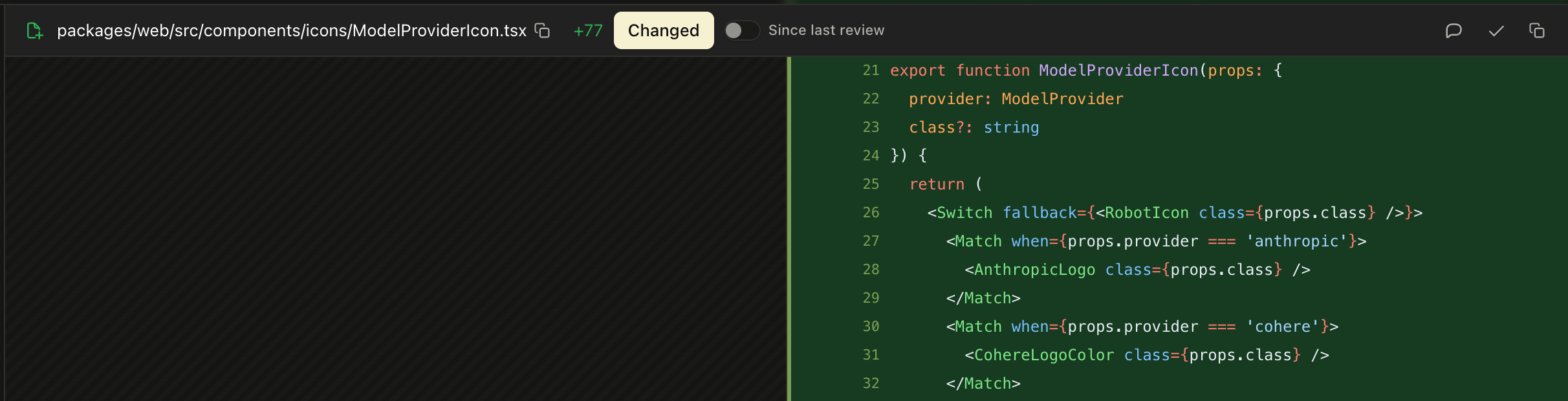
Every file is labeled against your last pass: An unchanged, reviewed file collapsed above a changed file An Unchanged file can still show line stats, like the one above. It did change in the pull request — it just has not changed since you last looked at it. The check on the right is per-file review state, and clicking it toggles: Files collapse once they are reviewed. Above, the first file is collapsed because it is fully reviewed, and the second is open because it is only partly reviewed.

Since last review

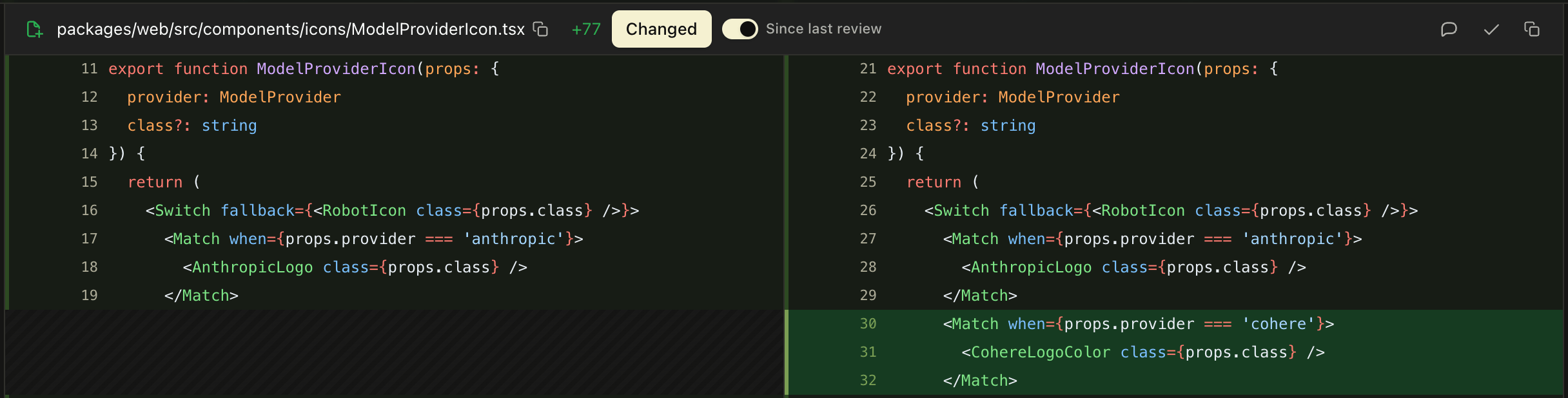
A changed file opens on the full change, the way a reviewer arriving fresh sees it. A changed file showing the full diff against the pull request base Flip Since last review and the emphasis narrows to what arrived after your last pass. What you already reviewed stays on screen, dimmed, so you keep the surrounding context. The same file with Since last review on, highlighting only the new lines The toggle only appears on files that have something new to show. If the base branch moved too, review against the merge candidate to keep the author’s new work separate from what the merge pulled in.